"Everything Must Go On" - Suede and Manic Street Preachers, live at The O2, London (November 2026)
/Rock stars aren’t exactly renowned for sharing the spotlight. A co-headlining agreement promises to remove the usual hierarchy, but a concert still has a timetable. Someone plays first, someone gets the final bow.
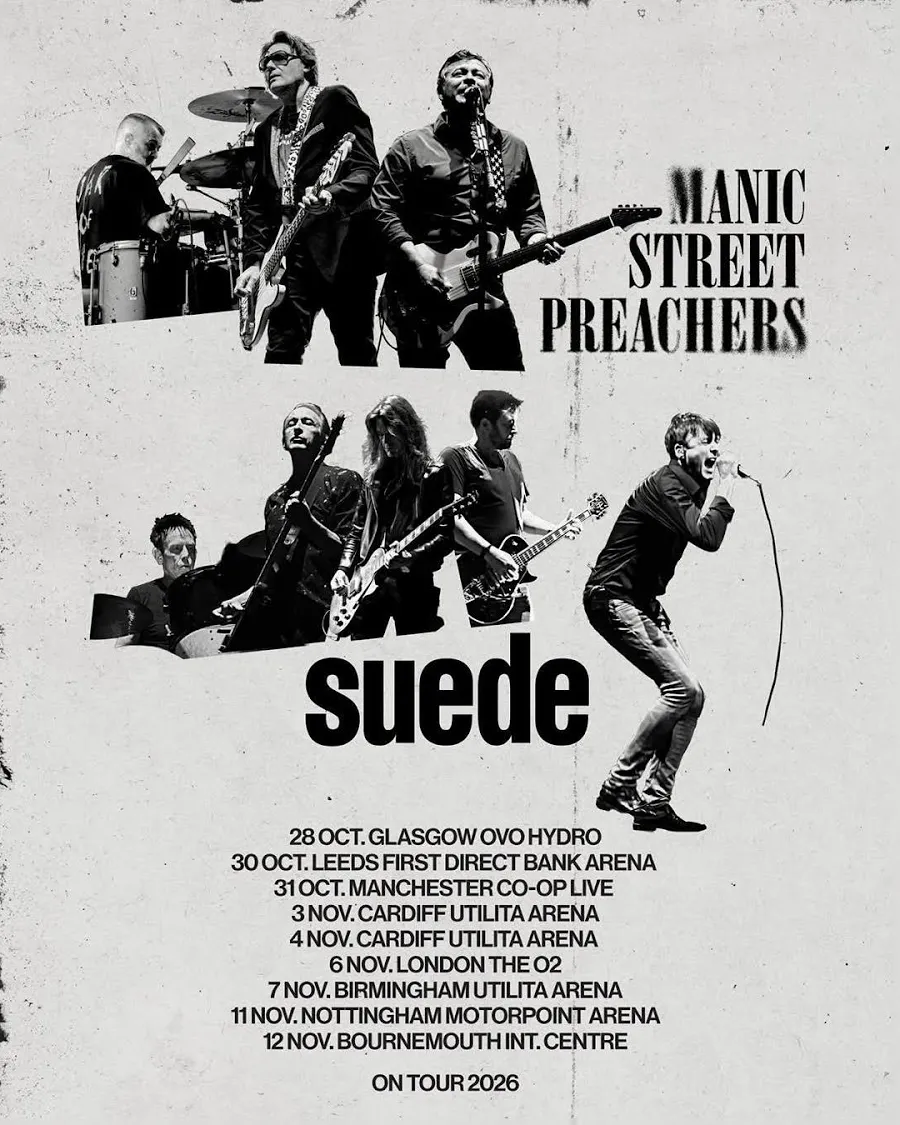
At The O2 in London, that logistical wrinkle belonged to Suede and Manic Street Preachers, two British rock institutions renewing a touring partnership that stretches back to 1994.
Quite the egalitarian arrangement! But could two bands with shared musical DNA and contrasting personalities offer their fanbases more than just two concerts stapled together?
Both bands first met on the road during a short European run in November 1994, at a tumultuous, transitional time in their histories. Suede were still finding their feet after guitarist Bernard Butler’s departure, while the Manics were touring their bleak, controversial third album, The Holy Bible, amid considerable personal turmoil.
Those shared bills in their early days weren’t quite the rotating, arena-sized co-headline arrangement the groups would adopt decades later in North America in 2022 and the UK in 2024. Clearly, the kinship endured. And since everything must go on, the bands reunited for another arena adventure across the British Isles in 2026.
The timing brought a neat double coincidence. Both bands had released albums in 2025, Suede’s Antidepressants and the Manics’ Critical Thinking, while their landmark 1996 records, Coming Up and Everything Must Go, were turning 30.
In the days leading up to London in early November 2026, the Manics had closed out two nights in Cardiff as hometown heroes. With the Welshmen scheduled to open at The O2, local lads Suede would get the last goodnight.
It’ll be alright and ever so nice, whatever the order. I’d followed the Manics for nearly 15 years and come to Suede much more recently but hadn’t yet seen either live. We’re going out tonight regardless.
Manic Street Preachers
‘Motorcycle Emptiness’ got the Manics moving, with James Dean Bradfield immediately juggling the two jobs that would define my view of their set.
Singing lead while handling some seriously demanding guitar parts, he occasionally found a few beats to whirl away from his microphone before the next vocal line called him back. Imagine if Guns N’ Roses guitarist Slash and singer Axl Rose were rolled into one five-foot-five fire-starter.
The former’s ferocious guitar tone fanned the flames of the glam-punk ‘Slash ‘N’ Burn’ from the Manics’ 1992 debut, Generation Terrorists, but double duties left Bradfield precious little time for Axl-style strutting. The rapid spins on the spot would have to do.
Bassist Nicky Wire was more mercurial in motion and mood. Tall and lanky, he sometimes stalked the stage, yet often stood smiling almost serenely at his microphone. With the touring guitarist handling much of the backing singing, Wire could mostly concentrate on his bass, occasional vocal lines, and the running commentary between songs.
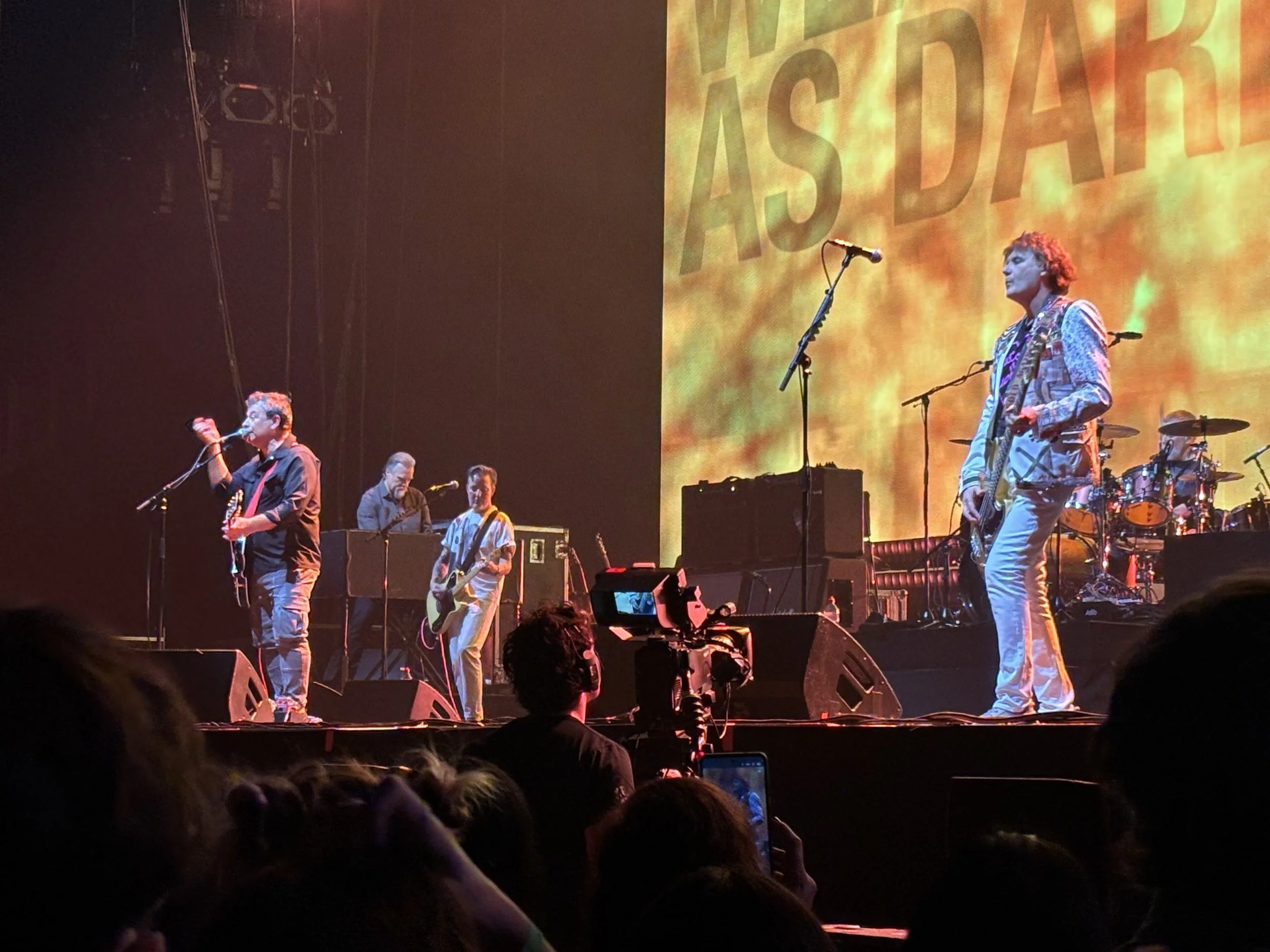
Across the 18-song set, this banter arrived at auctioneer speed. Bradfield and Wire traded dry asides and extravagant introductions of each other. Wire hailed the singer-guitarist as a “human riff machine” who “sings like an angel but plays like a devil”, while Bradfield announced his cousin, drummer Sean Moore, as the “rhythmical beast from the west” and “blood of my blood”.
They also spoke repeatedly of a musician absent from the stage.
Richey Edwards, a guitarist and lyricist central to the band’s early identity, disappeared in 1995 and was legally presumed dead in 2008. Wire introduced ‘Little Baby Nothing’ by praising some of Edwards’ finest lyrics and recalling an early house-sharing anecdote in which Bradfield came downstairs with “this great song” on guitar. Their combined result from the early Nineties re-emerged in this set as a piano-led, largely acoustic rendition that let those words cut through the glam-metal production on record.
The references continued in a mock game of ‘Richey Edwards Bingo’, where Bradfield offered the crowd a choice between two songs with Edwards’ lyrics. We could pick either ‘This Is Yesterday’ from The Holy Bible or ‘Kevin Carter’ from its follow-up, Everything Must Go, with cheers supposedly deciding the winner.
‘This Is Yesterday’ prevailed, and he played it alone on acoustic guitar, recasting this rare moment of emotional shelter on that album as an even tenderer ballad. Yet even its bruised beauty came wrapped in a suitably droll aside about voting.
The Manics’ musical range stretched well beyond their early punk attack.
The title track from Everything Must Go rose on almost operatic swells, ‘Ocean Spray’ softened the sound with acoustic guitar rhythms, and ‘La Tristesse Durera (Scream To A Sigh)’ began with Bradfield’s voice virtually alone, offering another chance to hear its full grain and force without instruments or singalongs competing for attention. On ‘Your Love Alone Is Not Enough’, he did double duty once again, this time taking the higher lines originally sung by guest vocalist Nina Persson (of Swedish rock band The Cardigans) and turning their classic duet into a one-man call-and-response.
Covers also provided some unexpected detours in the setlist. Bradfield slipped a snippet of Bonnie Tyler’s ‘Total Eclipse Of The Heart’ into the start of ‘No Surface All Feeling’, honouring the late Welsh singer, who passed away in July 2026 at 75.
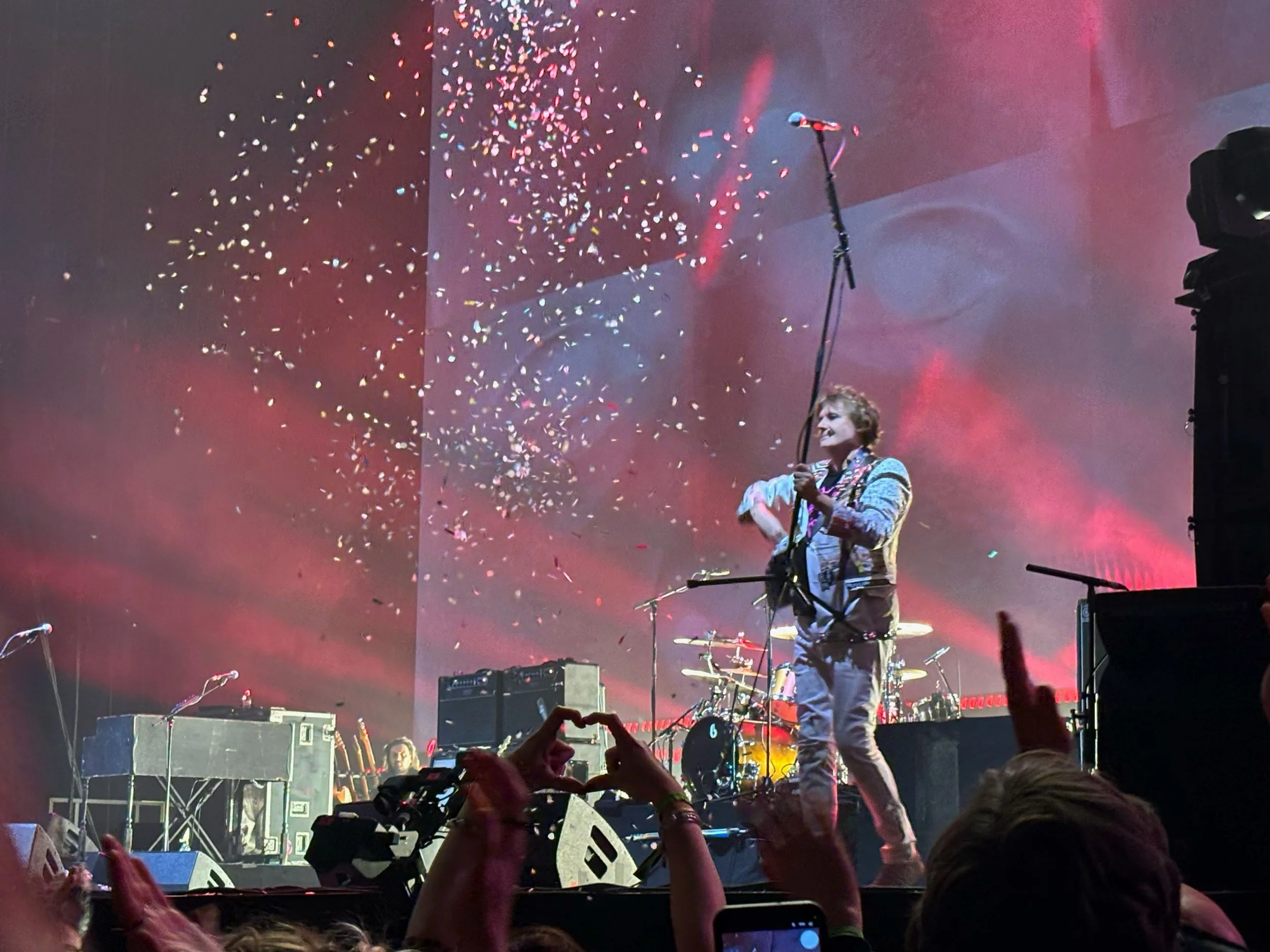
Wire, meanwhile, punctured his partial acoustic cover of Echo & the Bunnymen’s ‘Bring On The Dancing Horses’ with a dash of humour and a handful of confetti produced from his very own pocket. As the audience cheered for his spontaneous-looking, decidedly low-budget stage effect, he launched into ‘Hiding In Plain Sight’, one of the evening’s two songs from 2025’s Critical Thinking, and a rare song-length lead vocal from him.
The band’s socio-political sensibility was apparent in their visuals, as well as their lyrics. During ‘A Design For Life’, the screens cycled through archival footage of British life, covering not only protests and trade union strikes but also school fêtes, sports days, and family holidays. It was a busy mosaic of the ordinary people behind a song about aspiration and class, greeted with the kind of collective roar that accompanied much of the Everything Must Go material.
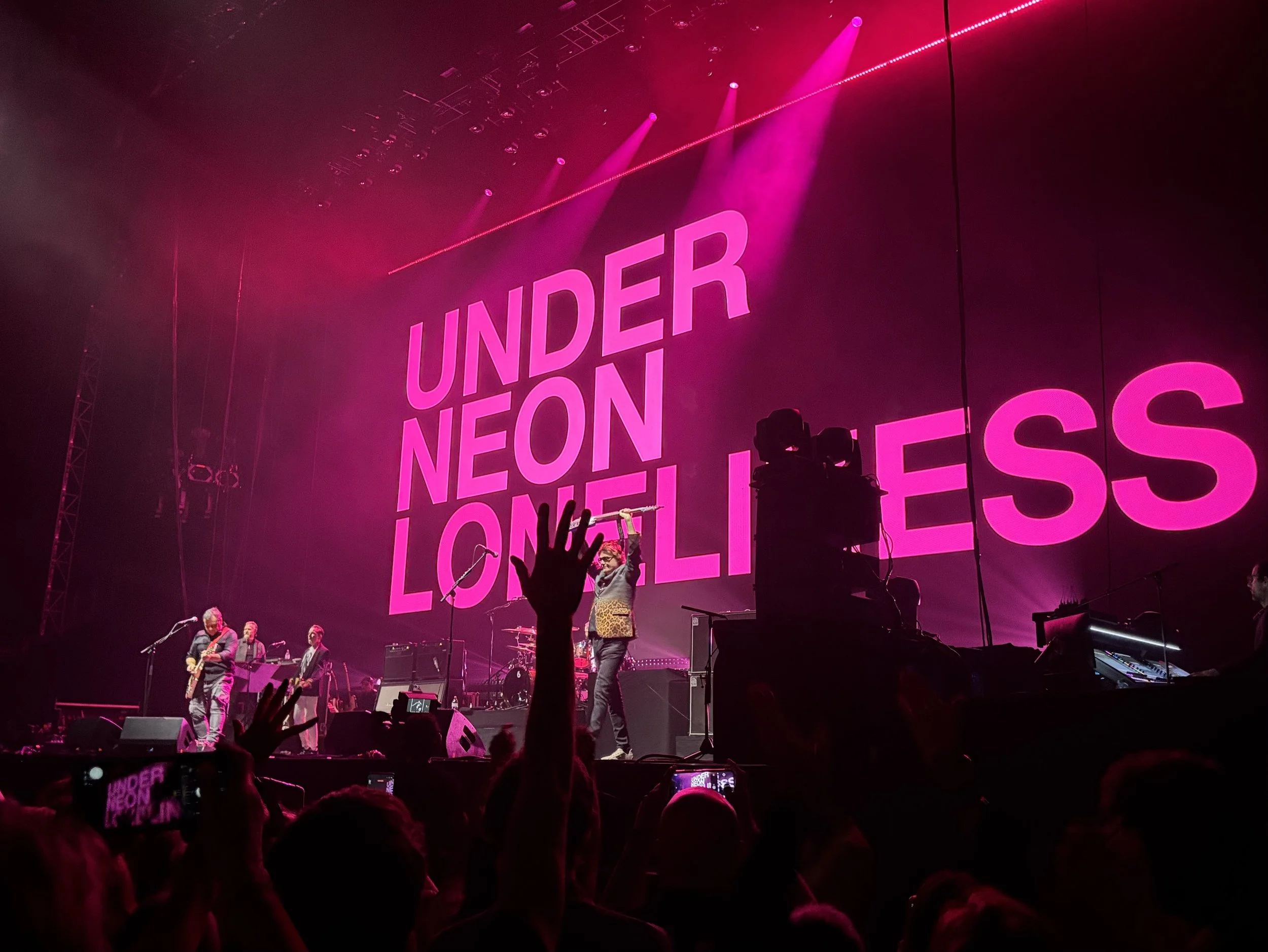
Then the references to Edwards became impossible to separate from the performance.
After recent single ‘Decline & Fall’, the set’s other selection from Critical Thinking, Wire recalled the band’s first foray into the English capital.
“It’s 37 years since our first gig in London at the Horse and Groom pub,” he reminisced before making a defiant claim.
“There are three of us onstage tonight. But we are. Always. Fucking. Four.”
The touring musicians stepped aside for a moment’s menace. Bradfield, Wire, and Moore tore into ‘Die In The Summertime’ from The Holy Bible, a prickly piece of post-punk partly penned by the missing man in this formation.
During ‘You Love Us’, a montage of early band photographs included Edwards. Near the end, Wire quietly murmured ‘we love you’ and turned his back on the crowd, looking up toward the screens. Perhaps it was for the audience, perhaps for Richey, perhaps for both.
The gesture lasted only a moment, but Wire was soon back to his wily ways.
As the band left the stage for the last time, he lifted a microphone stand aloft and released another cheeky pocketful of confetti into the immediate vicinity. I laughed. I loved it.
Suede
“Enjoy Suede, they’re on fucking fire!” had been Bradfield’s parting promise to the crowd in the previous performance. Half an hour later, the lights dropped, and smoke thickened across an empty stage.
Through it emerged tonight’s hometown heroes. Perhaps not literally on fire, but coming in very hot.
The trudging wallop of recent single ‘Disintegrate’ made Suede’s arrival feel like a gothic film starting at its most sinister scene, yet the song soon soared sky-high, carried by a chorus from frontman Brett Anderson sounding half his age. His banshee brilliance on the title track from Antidepressants also kept the energy and emotion at dizzying heights.
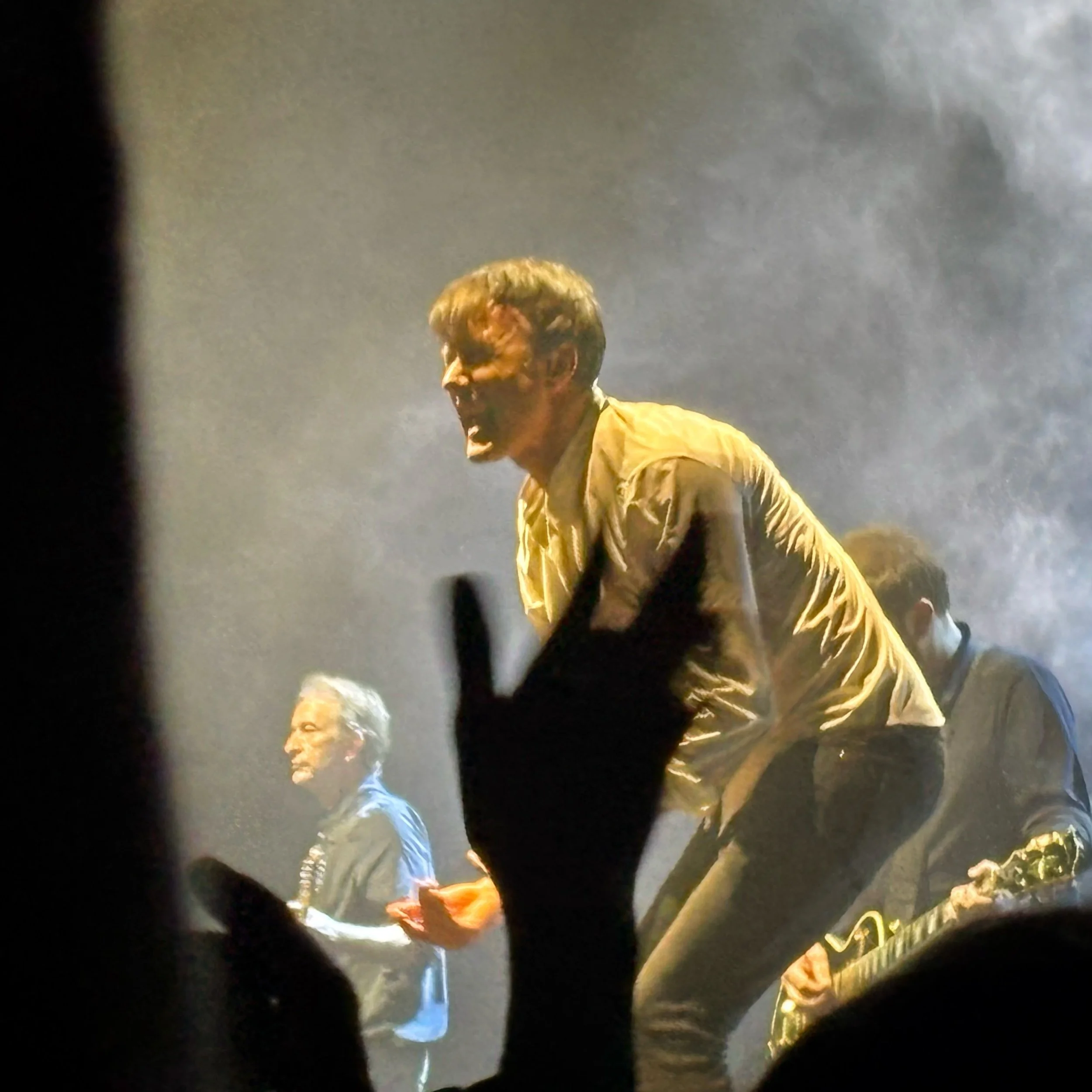
Anderson’s song introductions served as miniature trailers for the romances, resentments, and nights out populating Suede’s songs. Before ‘Trash’, he welcomed us into “Suedeworld” through a poetic inventory of chain-link fences, lovers in the street, and litter on the breeze. Those images clicked into place once the song began, and we swayed and sang along to the lead single from Coming Up, celebrating 30 years on the airwaves.
More Nineties classics came charging back with the likes of ‘Animal Nitrate’ and ‘We Are The Pigs’, announcing the band’s glam-punk credentials with a frontman prowling the front of the stage unchained and ravenous to entertain.
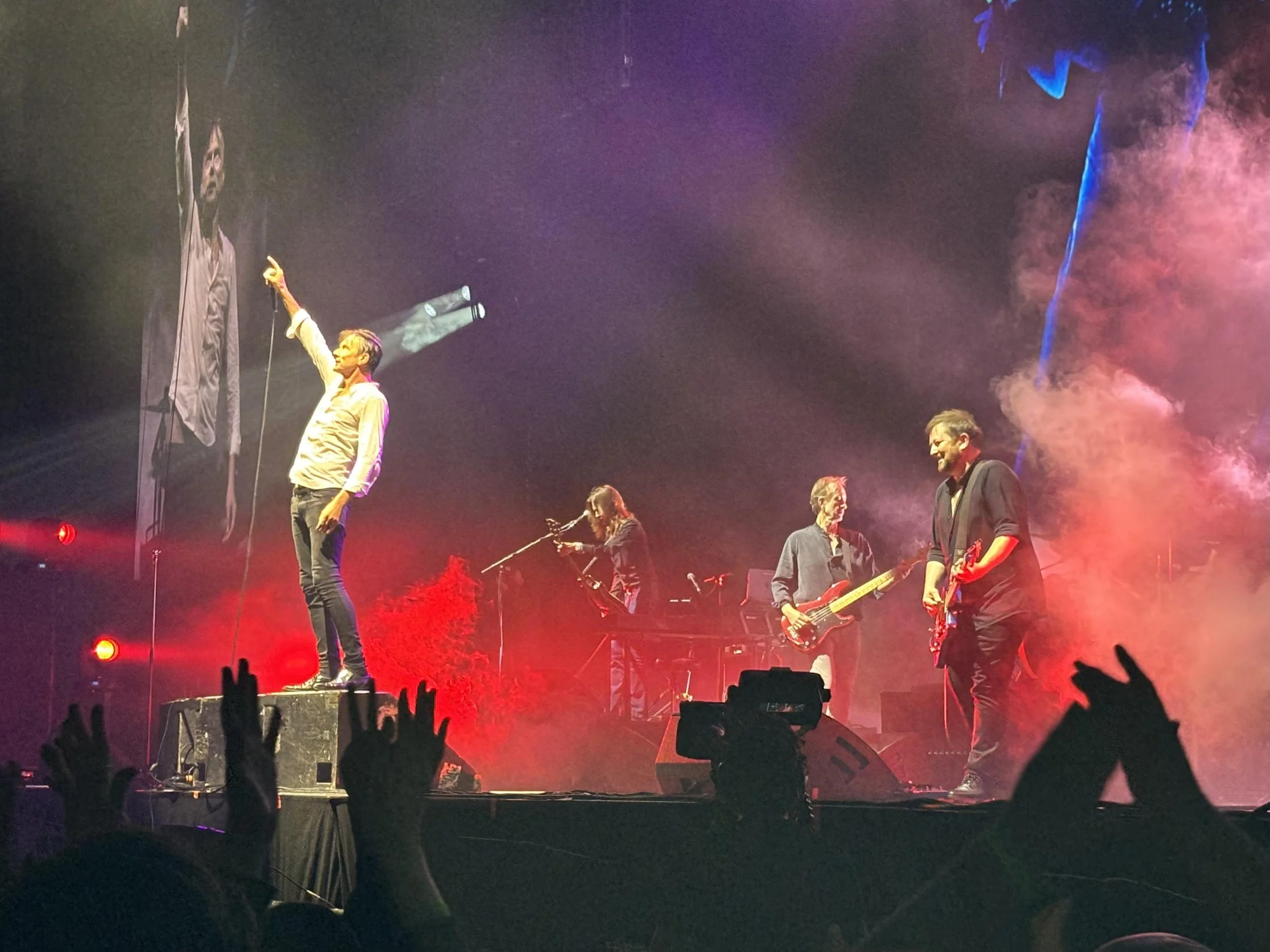
Matching a Bowie-like mystique with Jagger’s stuntman stamina, Anderson treated the stage as a personal obstacle course. He frequently climbed the stage monitors like they were podiums and headed down toward the barrier to meet with fans up close and sweaty. He lay flat on his back at the start of ‘June Rain’ and swung his microphone cable like a lasso during ‘So Young’ until it wrapped around him. While Bradfield had to keep returning to his guitar during the Manics set, Anderson was free to throw his whole body into the performance.
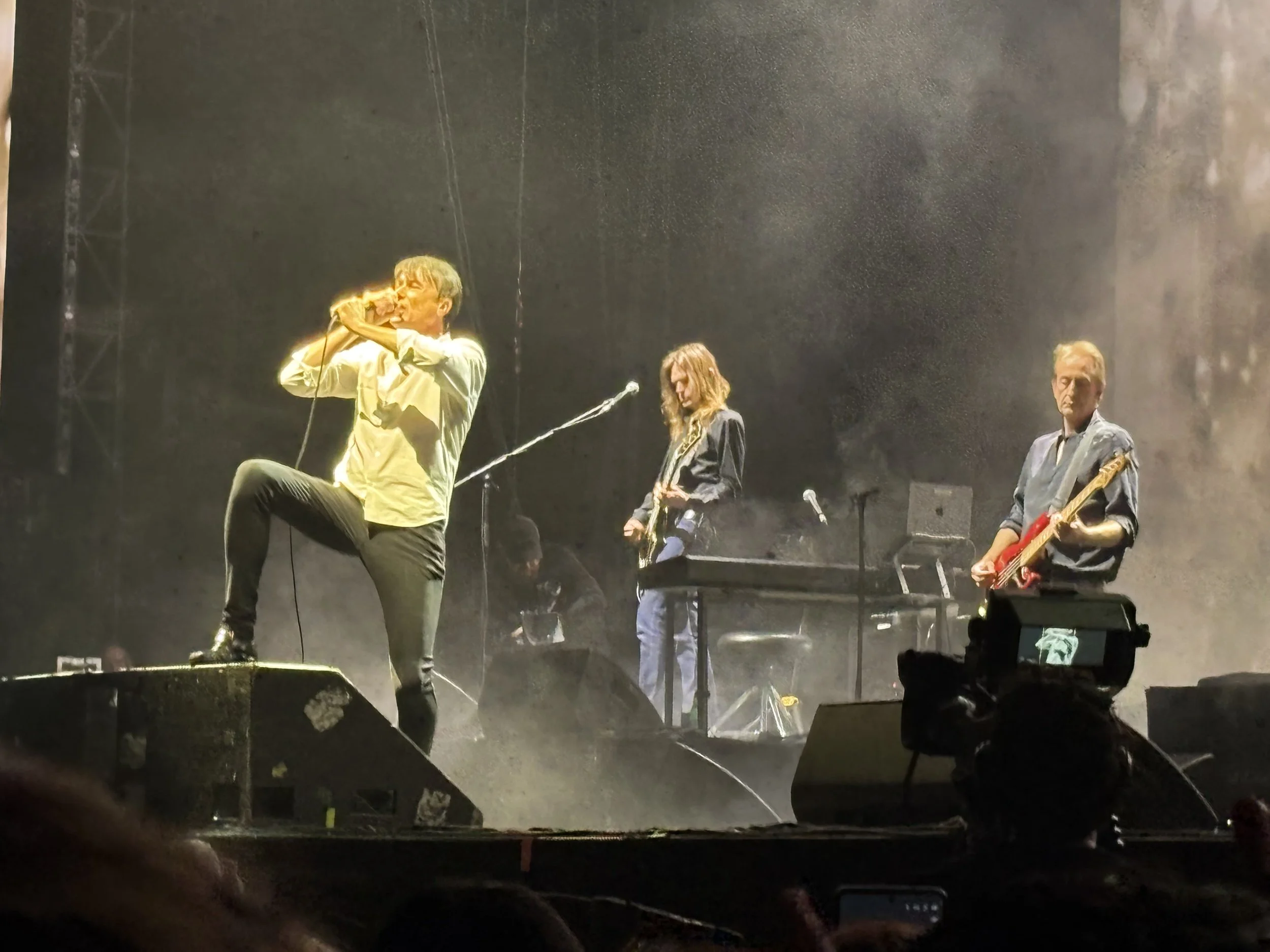
But all that theatrical freedom needs an instrumental engine. From my side of the floor, guitarist Richard Oakes was mesmerising in his own way, rolling his head to the rhythms and working his fingers through riffs that turned like interlocking gears.
Most of his adult life has unfolded inside this band’s music, having joined Suede at just 17 years old after Butler’s departure in 1994. Armed with a demo tape and a precocious take-me-or-leave-me pitch, it somehow worked. The prodigy has now become the 50-year-old professional, with decades of his own great guitar riffs in the sonic arsenal alongside his predecessor’s.
On the other side of the stage stood another new joiner from the mid-Nineties: the long-haired multi-instrumentalist Neil Codling. He frequently switched roles as the song required, sometimes standing at his keyboard with a guitar slung around his neck.
Between him and his cousin, drummer Simon Gilbert, was bassist Mat Osman, a lanky lad who coolly handled the low-end. Something of the Rolling Stones’ drummer Charlie Watts showed in his debonair demeanour, serving as an understated counterweight to the frontman’s physical abandon and letting the music do the talking.
That sense of control was key to the character of a Britpop slow-burner like ‘Saturday Night’. Anderson introduced the closer from Coming Up with a vignette of London buses, Tube journeys, and the everyday irritations standing between a person and a decent night out. Oakes began accompanying him alone on electric guitar before the full band joined in for a hazy singalong that avoided histrionics. It made my own mundane Friday-night trip to the arena feel like part of the song.
Suede weren’t simply taking the safest route through their back catalogue, and the setlist made a few unexpected turns into old, unfamiliar, or entirely new territory.
‘Killing Of A Flashboy’, a B-side from the Dog Man Star era, arrived from the archives, while ‘Everything Will Flow’ was a lone feature from 1999’s Head Music. An unreleased tune was even available for many of us to learn on the spot, with Anderson dedicating ‘Tribe’ to the committed fans near the barrier. Later on, after ‘Shadow Self’, he thanked the Manics for kicking off the event.
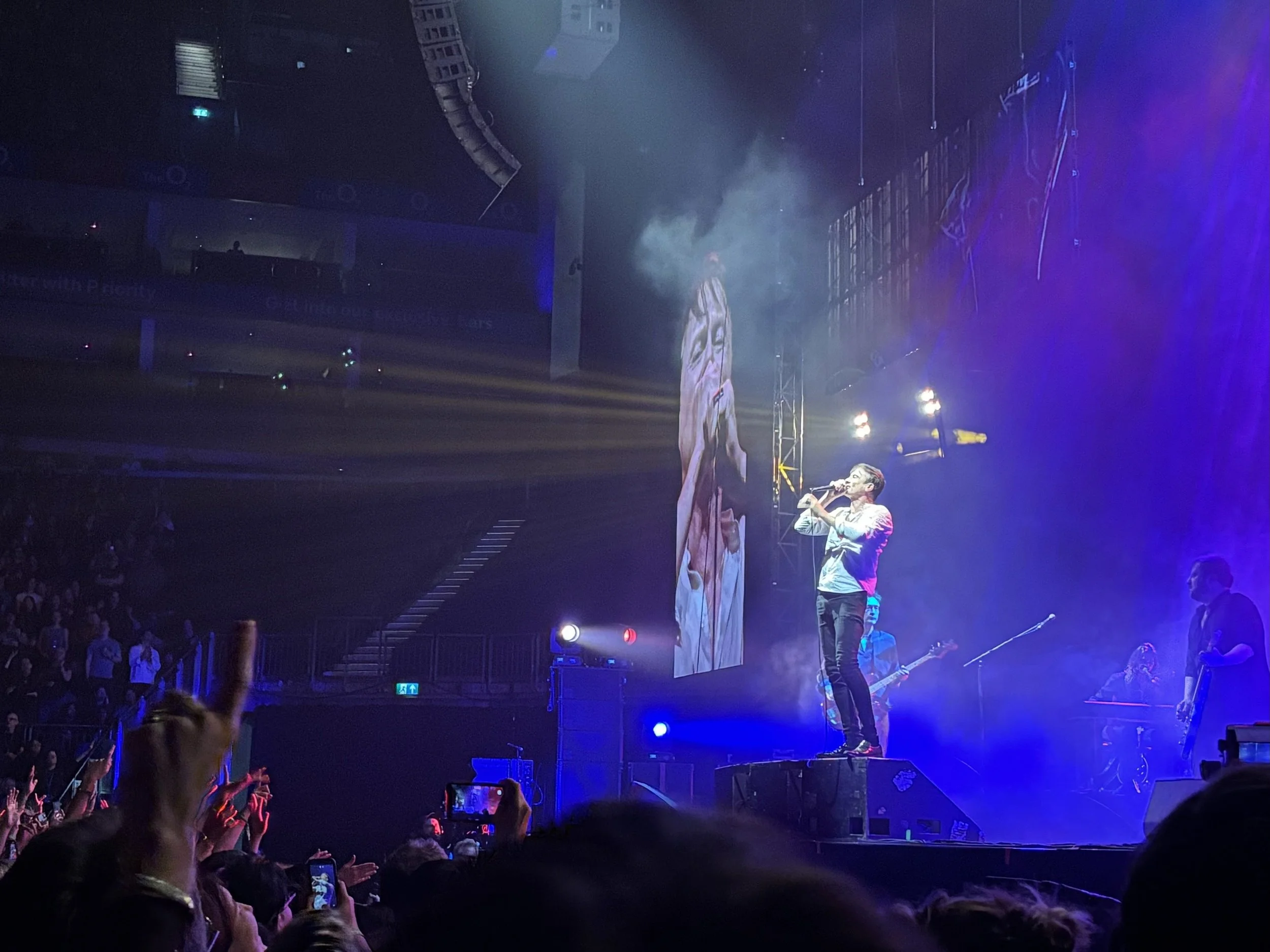
“We’re an anti-nostalgia band,” Anderson also proudly declared, while admitting in the same breath that “sometimes we like a bit of nostalgia”. The numerous Nineties hits on the night were greeted like old friends, but Suede’s 17-song set did include six songs from the 2020s. They could revisit the streets of their youth without moving back into them.
Their newer material also brought matters much closer to home.
“Let’s hear it for the mothers!” Anderson yelled, prompting a cheer from the crowd.
“Let’s hear it for the sons!” drew another one.
“This is a song for a love that never dies.”
Autofiction’s ‘She Still Leads Me On’ was written about Anderson’s late mother, who passed away in 1989 when he was 21, and has him acknowledging the full spectrum of their relationship from boy to bloke.
The good, the bad, and the sad swirled together in an anthem about refusing to surrender the love that outlasts them. I felt tears welling up. In many, many ways, we’re still young boys. No elaborate staging was necessary.
‘Still Life’, a ballad from 1994’s Dog Man Star, took the idea of restraint further into territory I never would have guessed.
Codling sat at the piano while Anderson sang under a separate spotlight. The music slowed, then stopped. Codling fell silent, and Anderson suddenly stepped away from his microphone but kept singing, entirely unamplified.
Had something just gone horribly wrong tech-wise in front of a 20,000-capacity crowd? A few seconds later, the arena hurriedly hushed as thousands of listeners strained to hear a single unaided voice.
After the smoke, the lassoed microphone, and the near-constant motion, the most audacious piece of showmanship was simply not using the equipment. It was unlike anything I’d ever seen at a concert of this scale. Good thing I was a few rows from the front to actually hear it.
‘Metal Mickey’ broke the spell and brought us back to full-band amplification and attitude. Suede closed up shop for the night with one of the group’s signature singles, ‘Beautiful Ones’, painting a hedonistic picture of the early-Nineties club scene in Britain that had us shaking our bits to the hits one last time.
“London. You. Have. Been. Beautiful!” Anderson breathlessly belted out at the end, before bidding his hometown audience a giddy goodnight.
This wonderful world of purchase power
Back on planet Earth after Suedeworld, I joined the sea of concertgoers flooding into North Greenwich, hunting for a spot on the overcrowded Tube or the next bus home. I’d made that journey from The O2 a few times before, but never after a one-two punch of heavyweights headlining this tented dome on the Thames. Quite a lot of bang for my buck.
Did it feel like two concerts stapled together? At times, absolutely.
There was a half-hour changeover, two different stage productions, and no all-star finale together. But a shared bill doesn’t demand a shared identity. It also makes an optimistic wager that fans of one band might be persuaded to give the other a chance. I was fortunate: I’d shown up for both.
That didn’t mean I enjoyed them equally. The Manics had triple the years of my affection, and their songs and stories about Richey Edwards carried particular weight over a decade and a half of my life. Yet a few moments and selections fell slightly short of the heights I knew from their records, and my attention sometimes drifted.
Suede, my newer discovery from about five years ago, kept me absorbed almost throughout, even if I’m still learning many of the Londoners’ lyrics. Between the band’s muscular precision and Anderson’s remarkable command of the crowd, I walked away dazzled by the final spectacle, with the Manics’ earlier fire still flickering in my memory.
Venues also have curfews. With two headliners sharing the bill, the compromise was always going to be shorter festival-length sets than the sprawl afforded to standalone shows. I came away hoping for a second shot at each someday, not wishing I’d seen either one alone.
And besides, don’t we always leave a gig with a few favourites left unheard?
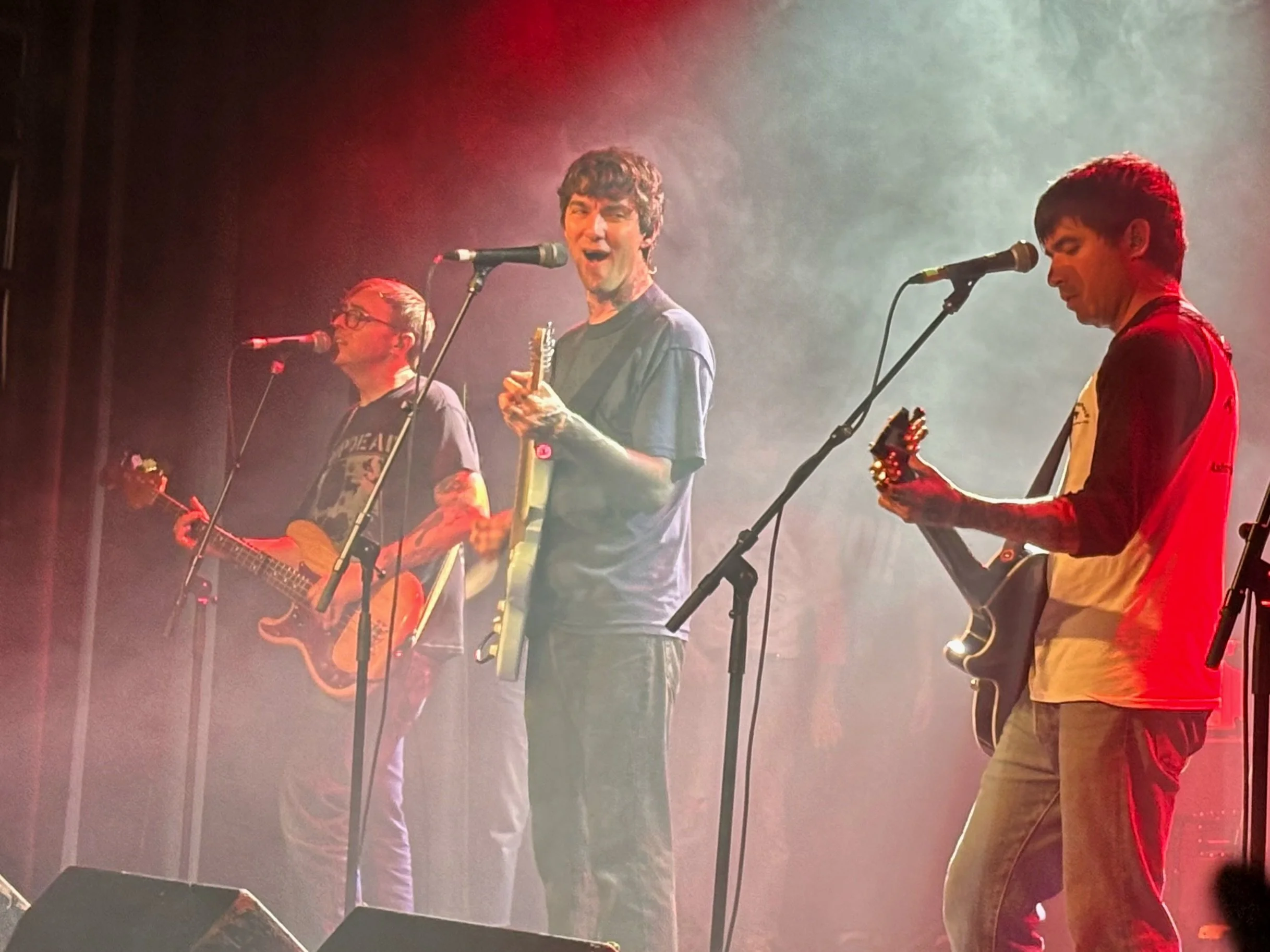

Writer Kurt Duvel reviews Suede and Manic Street Preachers live at The O2 in London, where two headliners share the bill but neither plays second fiddle.