"Soul Meets Body" - Death Cab For Cutie and Pool Kids, live at Troxy, London (26 September 2026)
/My Bloc Party T-shirt was the first detour in our conversation concerning the headliners.
Standing side by side on the front barrier for Death Cab For Cutie’s show at London’s Troxy, the stranger and I were already deep in discussion when he spotted the 2018 Silent Alarm tour shirt I was wearing, and raised me one better.
He had not only seen Bloc Party during their appearance on the NME Awards Tour in 2005, when the British band’s legendary debut album was still new, but also walked away with a cracked drumstick from founding drummer Matt Tong.
So he’s a Blochead too?!
It soon became clear that I had landed beside exactly the right person for my first Death Cab concert. My gig guru had attended several shows by the American indie-rock band across the mid-2000s and early 2010s, and - most importantly - he had been inside this 1933 Art Deco venue 24 hours earlier for the first of their two shows at Troxy.
Even as a long-time lover of Death Cab, I still had plenty to catch up on in person.
Formed in Bellingham, Washington, in 1997, Death Cab For Cutie broke through to the mainstream with 2003’s Transatlanticism, before breaking through to me with their major-label debut, 2005’s Plans. Ben Gibbard’s mastery of melancholy gave my teenage moods a better vocabulary, and their music has travelled with me throughout life’s ups and downs ever since.
Curiously, I had already seen Gibbard perform live. I watched him dash between microphone and drum kit during Coachella Festival in 2013 with side project The Postal Service, who were celebrating 10 years since the release of their one and only album, 2003’s Give Up. That landmark reunion tour put me in the strange subset of Death Cab fans who had somehow seen the frontman perform live, but not with his main band.
13 years on from that California desert scene, I’d finally found a chance to correct this incongruous fact about my fandom. And thanks in part to that night’s opening act at Troxy - a much younger band called Pool Kids from the opposite corner of the United States - I was ready to vote yes to seeing Death Cab live.

Telling you what I need
The Florida math-rockers Pool Kids first flagged me down in 2022 with ‘That’s Physics, Baby’. Its combination of crisp drumming, metal-style guitar tapping, and pop hooks made intricacy feel fun and less like music-fan homework.
The balance between complexity and immediacy has been a constant throughout the band’s development. After emphasising math rock on their 2018 debut, they moved towards bigger choruses on their self-titled 2022 breakthrough. Then, on 2025’s Easier Said Than Done, the group focused on structure and emotion before incorporating the technical elements.
The support slot therefore mattered on both sides of the barrier: to me as a rare chance to catch two bands I cared about on one bill, and to Pool Kids as an opportunity to open for their idols.
Singer-guitarist Christine Goodwyne told the Troxy crowd that if the four members could have picked a band to tour with, Death Cab would have been the dream choice. So the pairing wasn’t just support-act small print, but rather a sense of genuine respect, inspiration, and common ground between four band members with “pretty opposing tastes in music”.
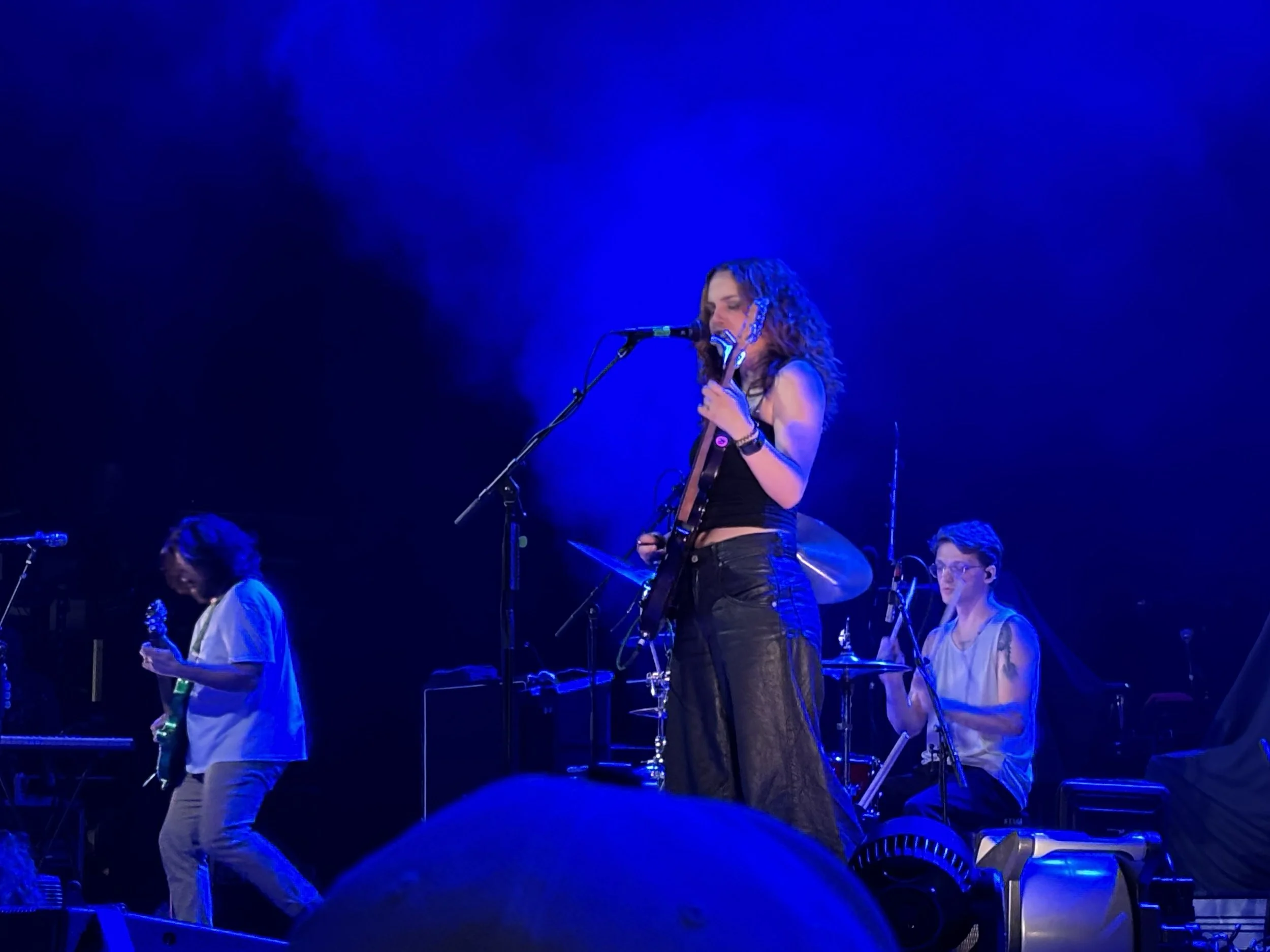
Pool Kids opening for Death Cab For Cutie on the second night at Troxy in London
With songs often shifting direction without warning, Pool Kids proved their complexity in a live setting, as well as their chemistry together.
Drummer Caden Clinton coolly commanded stop-start tempos, while Goodwyne moved between singing, tapping, and face-to-face shredding alongside fellow guitarist Andy Anaya. ‘That’s Physics, Baby’ retained all its mathematical mischief and melody in the laboratory of live performance, while ‘Easier Said Than Done’ and ‘Last Word’ showed how far the songwriting had stretched without losing either instinct.
Pool Kids performing ‘That’s Physics, Baby’ live at Troxy in London
Towards the end, Goodwyne cheekily joked that their tour manager apparently wouldn’t let them leave until all the merch had sold. Nothing like roping in your own crew for the evening’s final sales pitch.
I don’t feel any different
Death Cab then made their melancholy physical with ‘Riptides’, one of seven songs from their sturdy 11th album, 2026’s I Built You A Tower, threaded through a 24-song set.
That mix of old and new felt especially significant in 2026. Tower came from a time when they were looking back and celebrating a string of 20th anniversaries: the 2023–24 Transatlanticism/Give Up tour with The Postal Service, then the 2025 shows honouring Plans. The band say those dates helped them let go of some nostalgia and reconnect with the simple confidence of their early days. Producer John Congleton helped capture that feeling on record in just over three weeks.
For a band so closely associated with introspection, I was surprised by how animated Gibbard was as a performer.
His restless, occasionally manic energy helped ‘The New Year’ explode with dramatic downbeat guitar chords while he wondered why he didn’t feel any different despite all the fireworks and festivities.
Death Cab For Cutie performing ‘The New Year’ live at Troxy in London
Saturday was not simply Friday repeated, though. Seven slots in the setlist changed overnight, and my neighbour on the barrier became an accidental human commentary track, sharing small triumphs whenever something appeared that he hadn’t heard on night one.
‘Photobooth’ was one such reward. Gibbard looked out at some of the younger faces in the crowd and joked that the song was probably written before some of them were born. On the cusp of three decades together, Death Cab were now emo elders playing songs older than some people in the audience, while decades-long fans had been ageing alongside them.
That distance travelled surfaced again when Gibbard recalled early UK shows drawing around 200 people in 2001, more as gratitude for the transatlantic admiration that had brought them this far than as a present-day victory lap. Before ‘Rand McNally’ from 2022’s Asphalt Meadows, he spoke about recently meeting the father of a young touring musician, which reminded him of Death Cab’s own formative years crossing the United States and collecting the road adventures that only seem romantic once enough time has passed.
Those recollections sat neatly beside a record built around what we do with the past.
Death Cab For Cutie performing ‘Riptides’ live at Troxy in London
Behind the public time travel of the 20th anniversary tours, Gibbard was also dealing with the end of his second marriage. The “tower” became a place to put memories, loss, and grief while continuing to move forward. That personal reckoning had a personnel parallel in Death Cab itself, as the current five-piece had spent a decade developing its chemistry after longtime guitarist-producer Chris Walla’s 2014 departure altered the band’s creative axis.
So ‘I Built You A Tower (a)’ and ‘Pep Talk’ didn’t feel like contractual obligations before the classics, but like songs from a band still interested in its present tense. Elsewhere, the new record’s live range stretched from the simmering sadness of ‘Stone Over Water’ to the almost post-punk abrasion of ‘How Heavenly A State’.
One classic was still guaranteed to slow things down, no matter what.
You and me have seen everything to see
‘I Will Follow You Into The Dark’ is an outlier in Death Cab’s discography with an outsized afterlife - not unlike The Beatles’ ‘Yesterday’ in that band’s canon in terms of structure and impact.
Gibbard has recalled writing it in around 15 minutes, and the recording is essentially one voice and one acoustic guitar (McCartney is the only Beatle heard on ‘Yesterday’, but he is accompanied by a string quartet; Gibbard had no equivalent backing). Yet that tiny arrangement ensured the song’s status as one of Death Cab’s defining tracks and a mid-2000s cultural touchstone, earning a Grammy Award nomination, and - despite its modest initial chart performance – becoming their best-selling single. I wondered how something so intimate could survive a room this large.
The rest of the band duly left the stage, and with everyone else in the wings, Gibbard’s voice became the fragile focal point.

I’ve always found his singing unusually conversational, pairing a plaintive tenor with precise enunciation. It often sounds less like a rock frontman reaching for a note than a narrator fitting complete sentences into melody. He rarely seems to demand an emotion, describing the scene carefully enough to let you arrive there yourself.
Mid-song, he punctured the mood with some levity, recalling how he had once hated audiences singing over artists. He had spent his “hard-earned American dollars” to hear them, after all - the musicians onstage rather than his fellow fans beside him. Decades of being on the other side of that exchange had changed his mind, so he proposed a compromise: one chorus together, followed by an extra one alone so everyone still got their money’s worth.
The communal chorus worked beautifully. His solo bonus round did not: when Gibbard returned to the microphone, much of the Troxy faithful enthusiastically carried on singing anyway. But it was nothing to cry about.
The several-hundred-strong singalong had turned a morbid meditation on devotion after death into one of the night’s gentlest moments of communal calm amid all that manic melancholy.
Death Cab For Cutie performing ‘I Will Follow You Into The Dark’ live at Troxy in London
The reversal on ‘I Will Possess Your Heart’ was almost total. If ‘I Will Follow You Into The Dark’ reduced Death Cab to a single voice and guitar, the next track rebuilt the band layer by layer. Nick Harmer’s ominous bass line slowly accumulated guitar, rhythm, and noise, patiently transforming the song from indie-rock confession into an 11-minute proggy epic that made all the meandering feel purposeful.

Before the final stretch, Gibbard also returned Pool Kids’ earlier admiration. Calling the group “the best thing to come out of Florida since Disney World”, he dedicated Narrow Stairs-era ‘Cath...’ to them.
I need you so much closer
Soon after, “a melody softly soaring through my atmosphere” for more than two decades arrived in the form of ‘Soul Meets Body’.
Its R.E.M.-style jangle sent my thoughts to far-off destinations in my own past as a teenage fan in South Africa, where international indie tours were hardly a given and seeing Death Cab in person felt less like a plausible plan and more like a distant possibility.
During the outro, Gibbard raised his guitar aloft, and those thoughts finally found a place far more suited for them. Right here in a London room, with hundreds of voices singing the lead single from Plans back to the crew who crafted it.
The four-song encore reached back into the early catalogue and culminated triumphantly in the title track from Transatlanticism. Like ‘I Will Possess Your Heart’, its repetition built gradually rather than arriving as an instant climax, with Jason McGerr’s drums gathering a hypnotic, trudging weight across a truly monumental final few minutes, stretched around a simple six-word plea: “I need you so much closer”.
Cue the curtain call and a thank-you to the Cutie connoisseurs who’d come out tonight in support. That probably ought to have been the end of the evening.

Thank you for today
Earlier during Pool Kids’ set, two women behind me had suddenly asked for help getting bassist Nicolette Alvarez’s attention. Apparently they were friends of hers, and I half-suspected a ruse to steal my barrier spot.
Still, I let them squeeze alongside me. They called out, Nicolette spotted them from the stage, and we received a happy wave back. Fair enough. Their story checked out.
Hours later, leaving the standing section after Death Cab’s encore, I spotted the same pair again. One of them recognised me and thanked me for helping earlier. Then I realised they were standing with Nicolette, the bassist whose band had helped turn my long-standing “hopefully someday” into reality.
I told her how good Pool Kids had been live, that ‘That’s Physics, Baby’ had got me into the band four years earlier, and that their latest album had kept me there.
“Keep it up,” I said.
“Oh, we ain’t stopping,” she replied.
Still buzzing with end-of-gig adrenaline, I couldn’t resist a playful nod to the album I’d just praised.
“Easier said than done.”
And with that, I left the three of them to their reunion and disappeared back into the crowd.
The distance between the music I’d carried with me for years and the people who made it had become very small indeed.
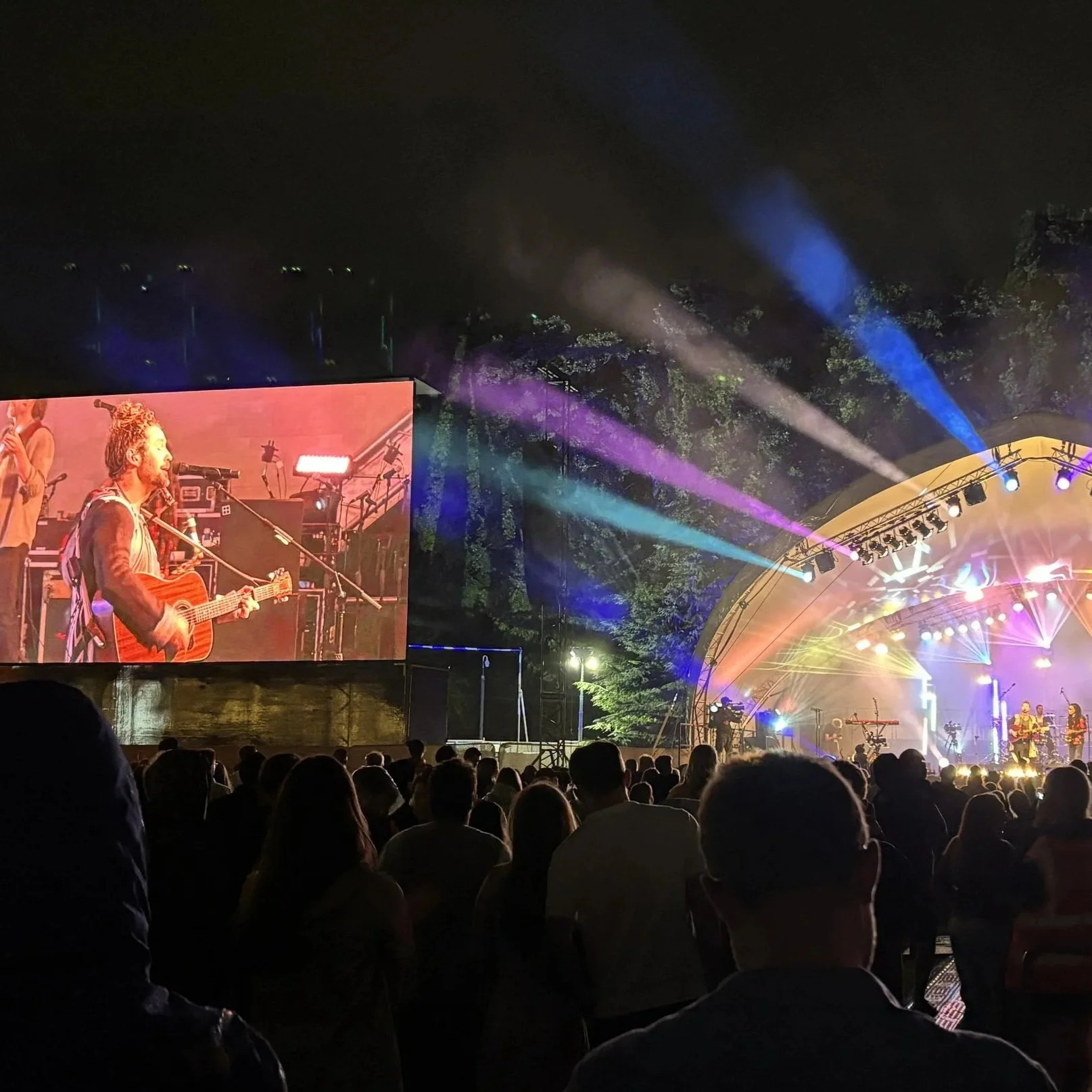

Writer Kurt Duvel reviews Death Cab For Cutie’s second of two nights at Troxy in London, where a two-decade wait to see Ben Gibbard performing live with his main band reaches its final destination.