
"The Kids Carry On" - How Blink-182’s ‘Anthem’ Trilogy Tracks Their Career Trajectory
/There is an inspired sequence in the newly released Travis Barker documentary ‘Louder Than Fear’ where the Blink-182 drummer recounts the most traumatic few minutes of his life while doing the thing that has defined much of the rest of his time on Earth.
He drums.
As Barker retraces the 2008 plane crash that nearly killed him, an intense solo becomes part soundtrack, part psychological pulse beneath the harrowing memory. It’s a neat filmmaking device but an emotionally brutal one, showing how thoroughly Travis inhabits his instrument. The drums have been a profession, a compulsion, and a creative language for most of his life. After the crash, they also became part of his route through trauma.
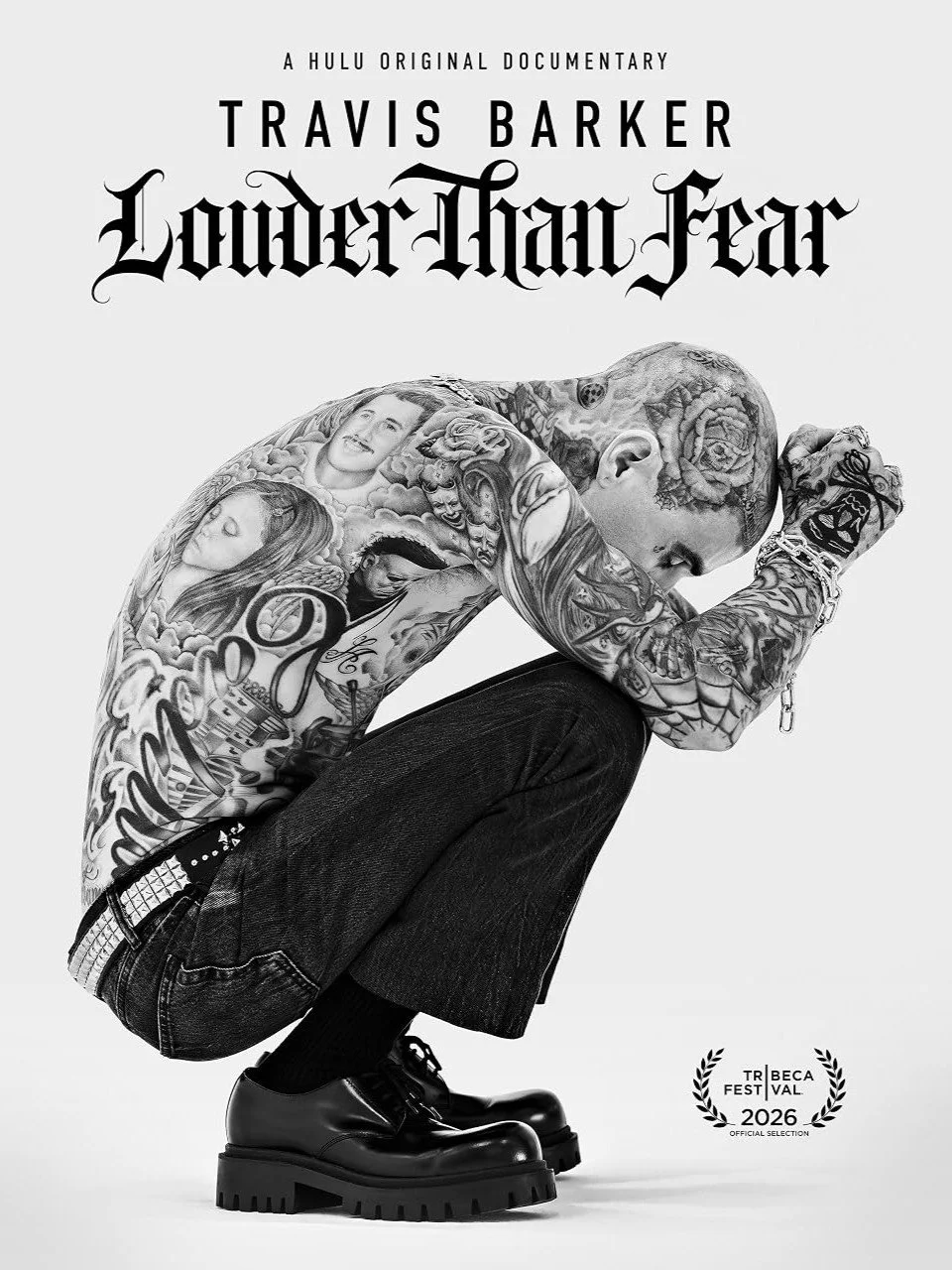
Seeing the timeline of Travis’ life unfold alongside the pop-punk band’s own history, I found myself reflecting on three of their songs bearing the ‘Anthem’ name that now sit like mile markers along that journey.
‘Anthem’ closed their mainstream breakthrough Enema of the State in 1999; ‘Anthem Part Two’ opened Take Off Your Pants and Jacket two years later; and 22 years on, One More Time… began with ‘Anthem Part 3’ in 2023.
This was no grand trilogy plotted in advance. Bassist Mark Hoppus recently explained that all three songs start with guitarist Tom DeLonge, with each sequel simply carrying enough of its predecessor’s rebellious spirit for the name to return.
Yet accidents can create interesting architecture. Placed together, I believe the songs form a three-part tale of desperation, devastation, and determination.
Desperation: ‘Anthem’ (1999)
The first ‘Anthem’ has a straightforward political system. Mom and Dad are in charge.
Friends are drunk, lipstick-stained, and making questionable decisions. The parents possess the keys to what DeLonge calls “instant slavery”. He threatens to pack his bags and run away, wishing his mates were twenty-one, before his domestic frustration expands into a chorus where the adults have left “the kids to carry on”.
This is adolescence in its most immediate form. The family home is the state, parental authority is tyranny, and adulthood is imagined as the magical age when nobody can tell you what to do.
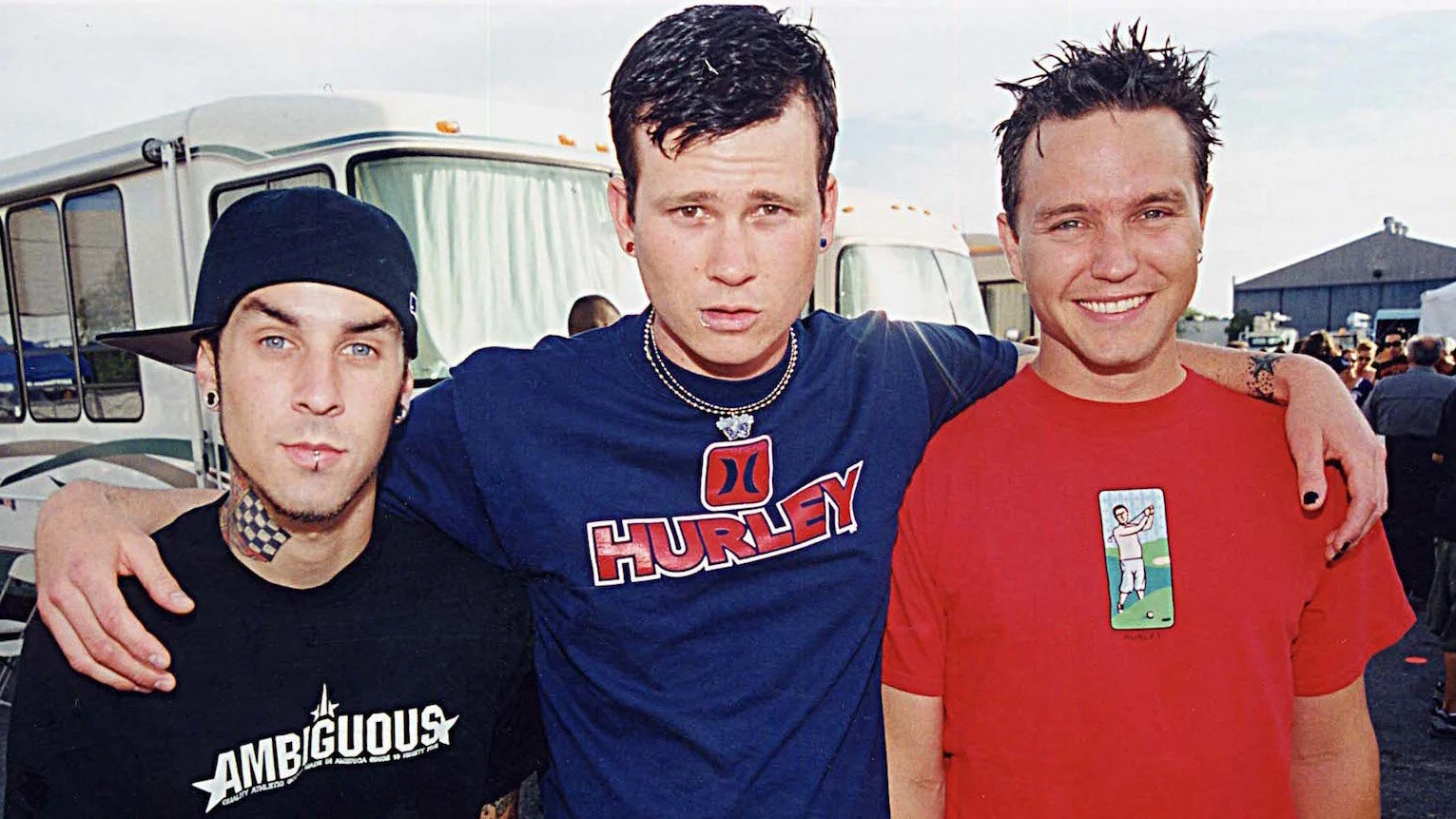
Behind the exaggeration was apparently a real-life high-school disaster for the Blink boys. Handwritten tour programme notes from ‘The Mark, Tom, And Travis Show’ in 2000 have Tom recalling a gig at a friend’s house that he advertised despite the parents only being away until midnight. A substantial crowd arrived—naturally followed by the police—leaving a broken stereo, evidence of a fight and frantic cleanup before the adults returned. The logic is recklessly adolescent. We have a small window before they come back, so let’s see how much trouble fits inside it.
Musically, however, Enema of the State captures three young musicians becoming much more disciplined.
Travis had only recently replaced founding member Scott Raynor, while Jerry Finn became the trusted producer who would help define Blink’s classic studio era. DeLonge later remembered Finn teaching them how to record properly and refusing to let bad performances slide. Barker raised the bar too. “We were nowhere near as good as Travis,” Tom admitted, “but we got better.”
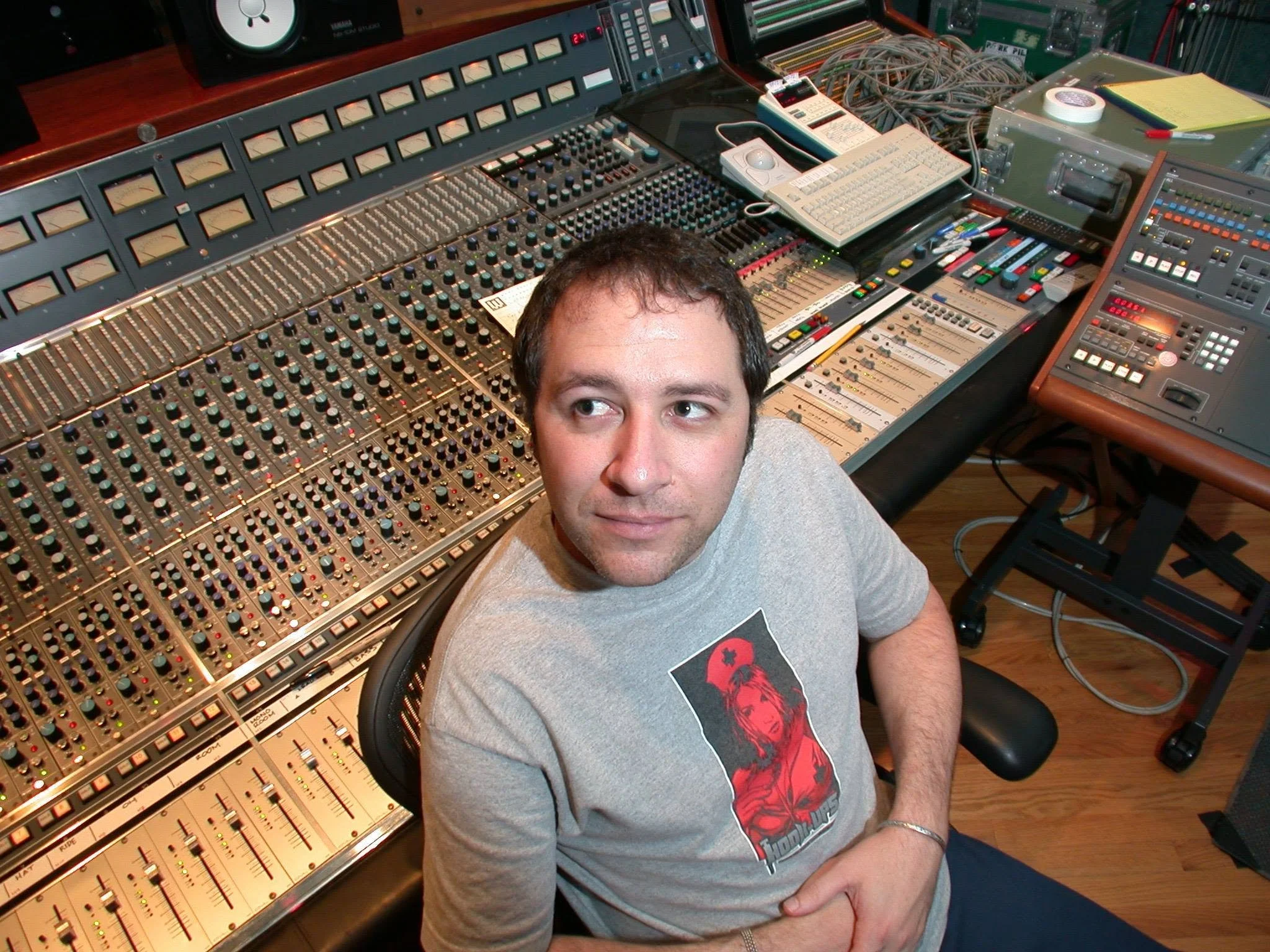
Producer Jerry Finn played a key role in shaping and capturing Blink-182’s sound from the late-Nineties to mid-Two Thousands. He ALSO worked with numerous punk rock and pop-punk artists such as Green Day, Sum 41, Alkaline Trio, and Rancid.
You can hear that escalation on ‘Anthem’. Tom opens with a clipped, buzzing riff, Travis locks into its rhythm as Mark’s mega-melodic bassline joins in, and the arrangement keeps changing gears rather than simply sprinting ahead at skate-punk speed. Across these rhythmic shifts, Tom’s high, wiry voice races through each misdemeanour as the song pivots between bright pop melody, double-time bursts, and heavier, headbanging choruses. The bridge strips almost everything away to Mark’s bass and a faint hi-hat pulse before the band revs up again, while the recurring “I time bomb” refrain sends grammar out the window.
There is a wry contradiction in an anti-parental song appearing on the record where Blink benefited so enormously from having the right adult in the room. Finn didn’t civilise the band, but he did help them organise the mess.
Devastation: ‘Anthem Part Two’ (2001)
If the first ‘Anthem’ is about escaping the family home, ‘Anthem Part Two’ is about discovering that the whole world may be another version of it.

“Everything has fallen to pieces” replaces the house-party aftermath with a dying Earth, corporate leaders, politicians, voting, schools, and workplaces. The original song’s “I” becomes “we”, while Mom and Dad expand into an adult establishment making decisions for young people and then complaining about the results. The teenager who wanted to run away now suspects there may be nowhere to run to.
It remains blunt political writing. “Kids can’t vote, adults elect them” will never be mistaken for Dylan, but elegance isn’t the point. The song captures that uneasy recognition that the rules governing you were designed by people who will eventually hold you responsible for how you react to them.
The music gives that grievance more weight. Blink’s own ‘Baba O’Riley’ surveys its teenage wasteland, and instead of bursting from the blocks, Tom picks through a clean guitar figure while Travis prepares the rhythmical impact with militaristic snare hits. When the full band arrives, the song feels heavier but also more spacious.
That adjustment was deliberate. Hoppus told ABC News in 2001 that Blink wanted Take Off Your Pants and Jacket to sound “harder” and rawer than their previous album, with Fugazi and Refused among the bands feeding their ears. Their sudden commercial omnipresence was uncomfortable too. Blink-branded pencils and notepads were a surreal measure of how swiftly the enterprise had travelled from its punk roots.
Revisiting the record through isolated instrumental and vocal tracks this summer, in its 25th-anniversary year, has actually made me appreciate how meticulous this supposedly rawer album is. Keyboards and organ hide behind guitar walls, Hoppus harmonies widen choruses you instinctively remember as Tom’s, and Barker is exceptionally busy without crowding everybody else. Finn could make three unruly musicians sound enormous while still leaving air around them.
The lyrics offer an even sharper contrast. The first song ended with a time bomb, yet Part Two opts for a metaphor of a slow-burning train wreck, with the kids trapped inside. Both are nihilistic, but a time bomb at least promises a definitive end when the clock, or one’s own patience, runs out. A train wreck leaves its passengers caught in an inevitable catastrophe beyond their control.
What followed makes that metaphor heavier in hindsight. Musical restlessness led to the DeLonge-Barker side project Box Car Racer in 2002, Blink’s darker 2003 album, and the band’s 2005 acrimonious split, which yielded further side projects with the Hoppus-Barker outfit +44 and DeLonge’s Angels & Airwaves. Their sonic guru and unofficial fourth member, Jerry Finn, died in 2008 following a brain haemorrhage.
Weeks later came the horrifyingly literal wreckage described in Travis’ documentary.
The September 2008 Learjet crash in South Carolina killed 4 of the 6 people on board: Travis’ assistant Chris Baker, security guard Charles Still, pilot Sarah Lemmon, and co-pilot James Bland. Barker and his close friend and collaborator, Adam “DJ AM” Goldstein, escaped with severe burns as the sole survivors.
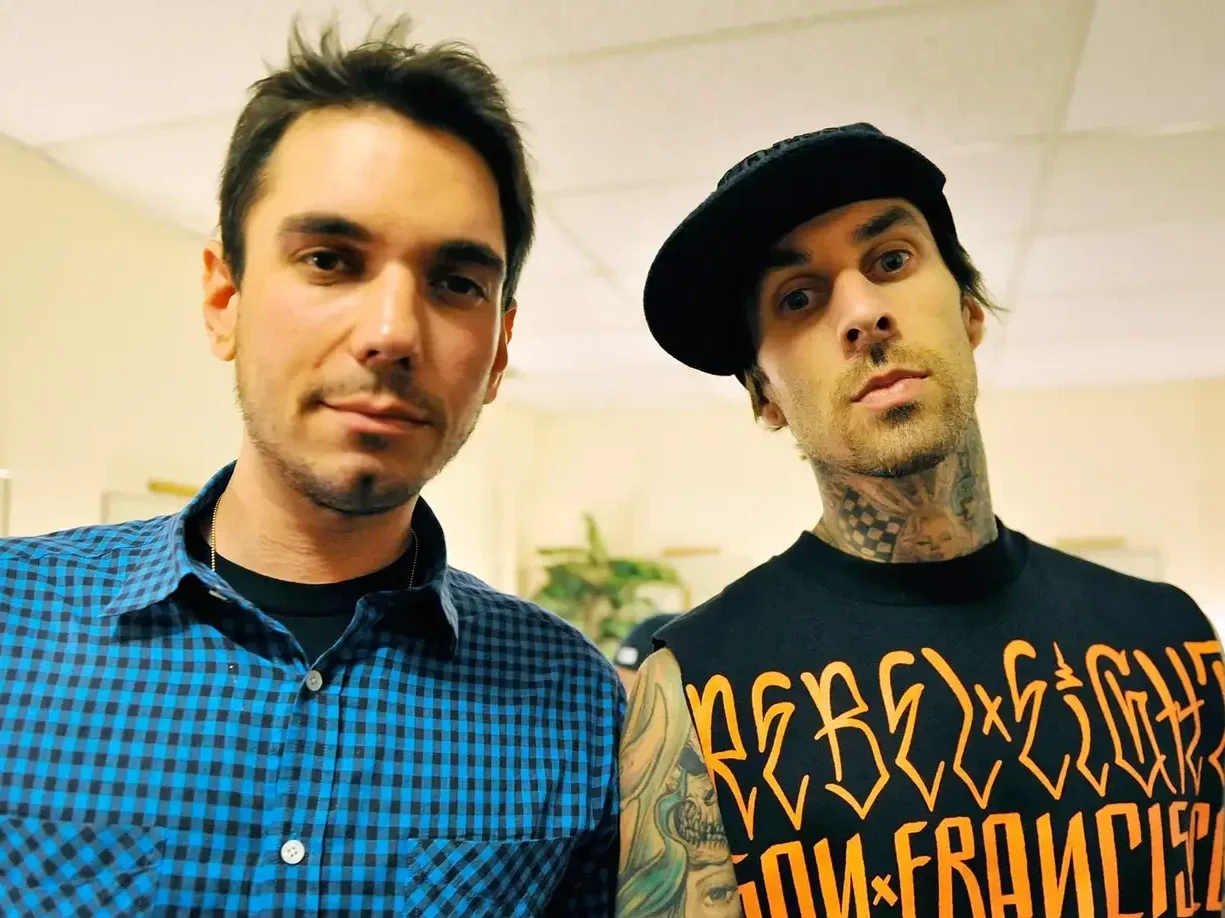
Adam ‘DJ AM’ Goldstein and Travis Barker were close collaborators, performing together as DJ-drummer DUO ‘TRV$DJAM’
Goldstein died from an accidental overdose involving cocaine and prescription drugs on 28 August 2009. He had been candid about addiction and a decade of sobriety before the crash, only for that recovery to be strained by anxiety and pain relief in its aftermath. That does not make DJ AM another direct casualty of the accident, but it makes Barker’s survivor’s guilt easier to understand.
By the first anniversary of the crash, Travis was the only one of those 6 people still alive.
‘Louder Than Fear’ turns familiar Blink biography back into bodies, burns, panic attacks, and grief. Barker suffered third-degree burns across 65 per cent of his body and avoided flying for 13 years. His recovery was never one glorious upward line, and neither was Blink’s.
The crash helped the estranged band reconnect in 2009, before another split with DeLonge and a continuing chapter with Matt Skiba. Then Hoppus was diagnosed with stage-four lymphoma in 2021. DeLonge later said he had been considering leaving music behind altogether before learning Mark was ill. Suddenly, playing with Blink was what he wanted to do again.
The world had fallen to pieces once more, but by ‘Anthem Part 3’ they were no longer bewildered passengers inside the wreckage. They were people who had survived it.
Determination: ‘Anthem Part 3’ (2023)
Part Three answers its predecessor by altering the opening thought: “Everything that we’ve tried.”
Everything no longer simply has fallen. The people inside this song have acted, failed, and are preparing to act again. And this time they won’t be complacent.
The teenager’s old desire to escape has become an adult decision to remain present. Tom turns towards a hanging head, an exploding heart, dead dreams, a terrible job, clenched fists, and the humiliation of aiming at something only to miss. The instruction is simple: get up and resist. The rebellion remains, but its target is oneself.
At twenty-something, Blink could blame parents and politicians. By middle age comes the awkward discovery that you may now be the adult holding the keys, and surviving the world may require taking responsibility for what happens next.
Barker was holding some different ones during One More Time…, becoming Blink’s producer after years of being seen by his bandmates primarily as the man behind the kit. He told the Los Angeles Times that rather than campaign for authority he would “just shut up and let the music speak”, staying behind after sessions to shape their fragments into fuller arrangements.
Barker later pushed back against criticism of the album’s sound by pointing out that he didn’t mix it himself. It’s an important technical distinction, although production and mixing hardly exist in separate universes. He spent 3 days finding drum sounds before recording the album’s drum parts in just 6 hours, and his role as producer extended to piecing entire arrangements together before they reached the mixing desk.
I remain a huge admirer of him as a musician, yet the finished record can favour an overwhelming surge where drums, guitars, and heavily treated vocals compete for the same emotional space. Hearing these instrumentals in isolation or fan-made song mixes has helped me appreciate the individual ingredients that went into the pie. Yet the sheer size of ‘Anthem Part 3’ works because the song is about reflection and return.
Its opening guitar pattern echoes Part Two while Travis erupts underneath, evoking the skate-punk blast from passages in Part One. Tom both sneers and soars with a voice that is recognisable without being fully recoverable. The infamous nasal tone remains, but age and years of atmospheric anthems in Angels & Airwaves have roughened and broadened it.
For the first time in the series, Mark joins him on lead vocals with his warm, deep baritone. The chorus becomes a shared rallying cry before the bassist takes the bridge alone, contemplating flatlining, approaching the light, and discovering that nobody cared you had died. After he endured chemotherapy and entered remission, gut-punch lines like these carry a biographical weight that feels all too real, perhaps especially for fans who’ve been along for the ride since Part One and are now seeing cancer and serious illness touch more of their friends and peers.
Hoppus still gives DeLonge much of the creative credit. Speaking about the trilogy in 2025, he said Part Three continued giving him goosebumps onstage because of the way DeLonge’s guitars soar and “when he’s singing like it’s coming from his soul”.
Perhaps that is what ‘Louder Than Fear’ ultimately adds to these songs for me. It reminds you how much mortality entered a band once famous for refusing to behave its age. Four people died in a fireball. Another friend survived it and was gone within a year. Burns healed but left scars. Friendships fractured and repaired. Cancer went into remission. Barker took to the skies again in 2021.
Taken together, the ‘Anthem’ trilogy travels from teenage desperation, through collective devastation, to the determination of middle age. The kid who wanted to escape the adults eventually became one, and discovered that carrying on demanded more than rebellion. Determination is not the clean opposite of devastation, but it is what survives it.
In 1999, Tom declared himself a time bomb. Almost a quarter of a century later, his promise was simpler: “I won’t fail.”
Who could’ve known how much carrying would be involved? Still, the kids carried on.
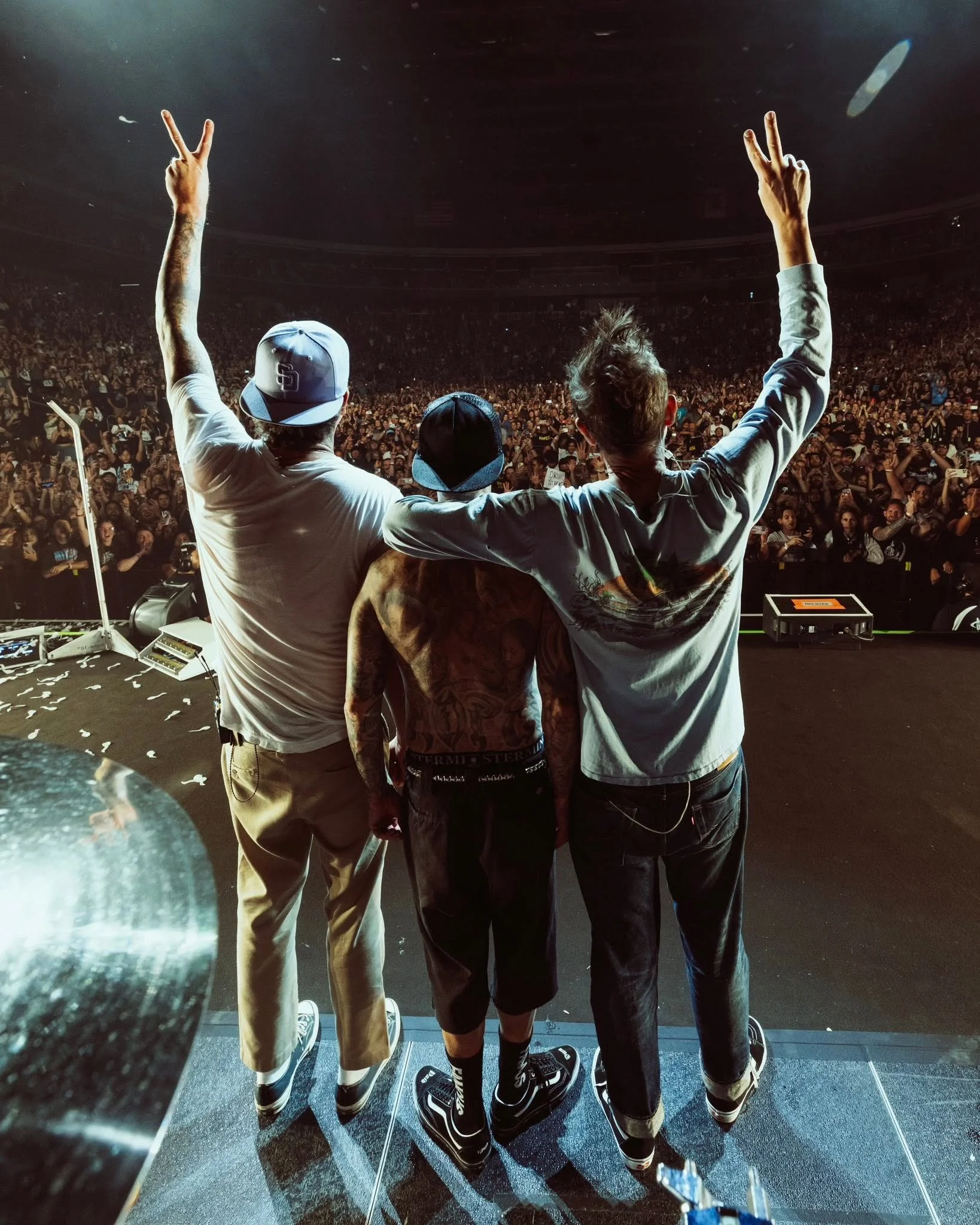


Writer Kurt Duvel tracks Blink-182’s ‘Anthem’ trilogy through 24 years of desperation, devastation and determination, as drummer Travis Barker’s 2026 documentary ‘Louder Than Fear’ sets the beat.